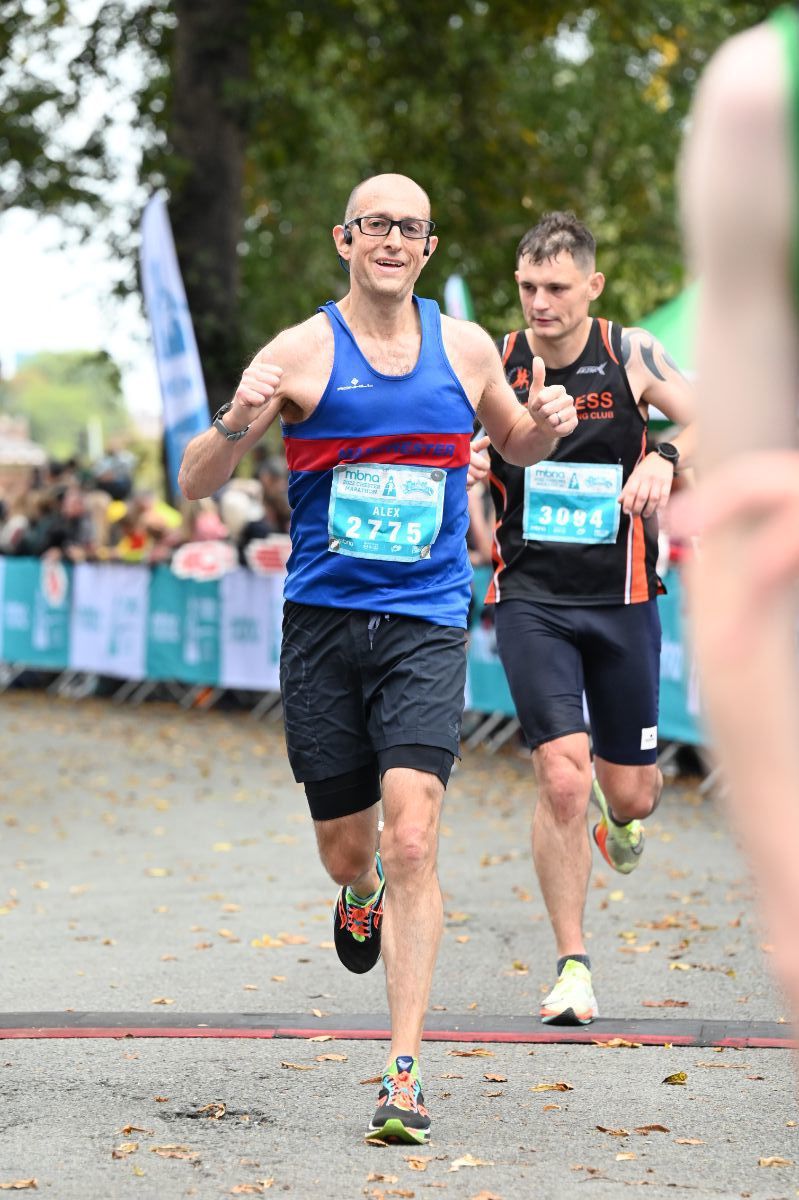
This is an edited collection of the various journal entries I wrote on my 9 year journey from targeting a sub-3 marathon to actually achieving it. This is a long read, so grab yourself a suitable beverage before starting!
17th October 2013
When I left school in 1995 the height of my running prowess had been achieving a just about average time at 1500m. We were awarded 1 to 5 points based on our performance in each event; over shorter distances I usually fell off the bottom of the scale, but at 1500m I finally managed to make a very average 3 points. But the height of my athletic prowess had actually been winning a backstroke swimming race, either 25m or 50m, I don’t remember clearly as I was 7 at the time…
I was always prone to a little portly-ness, but had a fairly ordinary 34″ waist when I left school. Over the following 10 years I ballooned and had a belly that was hanging over the waist of 40″ trousers. I don’t know exactly what I weighed but 240 lbs (108 kgs / 17 stone) wouldn’t have been a bad guess. Various abortive attempts at losing weight followed, including a brief running phase that resulted in half a mile of running followed by horrific shin splints and a slow trudging walk home.

And now, my goal in 6 months time is to run the Greater Manchester Marathon in under 3 hours; I’ve told a few people my goal now and even those that don’t know my history are giving me some very interesting looks – particularly those who run themselves and know just how tough a goal it is.
But – in July 2011, with no fanfare and without really telling anyone, I started recording everything I ate using http://www.myfatsecret.com, and that was it for me; I didn’t really change what I ate, I just ate less, I made sure I had a calorie deficit each day and my weight just start dropping. My wife noticed first, mainly she noticed that I’d started weighing everything I was eating. Then I noticed that I could do my belt up tighter. Then people started to ask ‘if I’d lost weight?’
I’d always cycled a lot and commuted by bike on and off so plenty of exercise meant I didn’t have to go on to starvation rations; then somewhere the germ of an idea that had been at the back of my mind started to grow.
A triathlon; I’d like to do a triathlon, a little searching and there was a local triathlon in 9 weeks time – the May 2012 Wilmslow Triathlon (400m swim, 20km bike and 6.2km run). The bike leg should be fine and you never forget how to swim (do you?), but I still didn’t know if I could run half a mile, let alone more than 3.
Well, having spent 10 years in engineering, academic research and running a business, I decided that I should do some research on ‘how to learn to run’ and ‘how to cure shin splints’. Well, 9 weeks of an awful lot of icing quite a bit of pain and following couch to 5k and I ran 5k! Of course the observant amongst you will note that the race actually involved 6.2k of running, but hey, what’s another 1.2k when you’ve already done 5k?
So on the 13th of May 2012 I completed a triathlon, I’d done it, goal achieved. The End. Only, as many triathletes and, in fact, endurance athletes of all types, will tell you, these things can get a bit addictive…
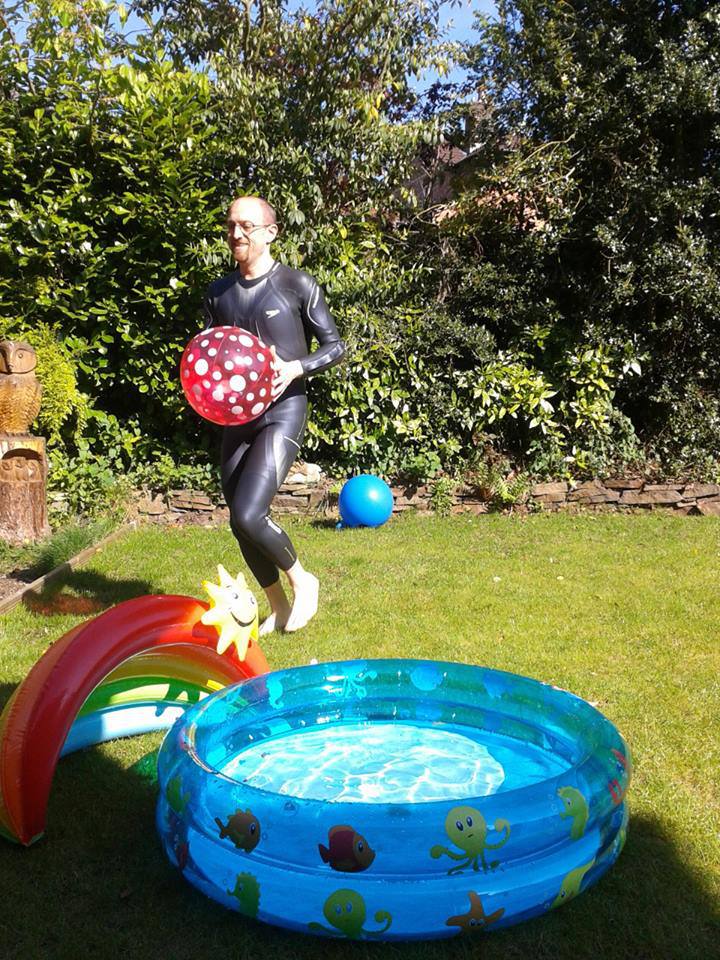
And so its now 2 years and 3 months since I started this journey with the simple step of recording my food. Six triathlons later (4 sprint and 2 olympic distance), a couple of stand alone running races, a sub 20 minute 5k and a 30″ waist and I’ve decided its time to run a marathon … in less than 3 hours; what can possibly go wrong?
18th October 2013
Today is a rest day, although my personal trainer has a ‘look’ he gives me when I talk about rest periods, not that I don’t ‘rest’, its just rest is a relative term. Today for example I did 7 miles on the bike towing 50kg of trailer and small boys. In principle I could have taken the car but these days I actually find it less hassle to use the bike than deal with parking etc. plus, and this is the main thing, I get to eat more food and I do still like food.
However, with a major focus on running this season I really need the rest days to try and keep my legs in adequate condition. At the moment I have a knee ‘issue’ which I think was brought on by a somewhat overdone long slow run, which was not slow enough, a bit too long and contained an unexpectedly large number of stairs. I’m hoping that with plenty of icing and rolling it will continue to subside.
I have had to develop a slightly unorthodox policy when it comes to injury – if I’d followed the classic; ‘stop as soon as it hurts’, rest and ice, then start again slowly in a week or two I’d have perpetually been doing week 1 of couch to 5k. So I have had to have a somewhat modified policy which became; make very good friends with ice packs and only stop if the pain continued to increase beyond a ‘moderate’ level.
It turns out this policy has ‘worked’ for shin splints, a hamstring injury, injuries to both calves and one knee injury so far. All but the last of these were in my first season of running, the second season has had a much lower injury count. I can’t put the lower injury count down to any one thing, but I made two major changes – I embarked on periodised training (using the Triathlete’s Training Bible) and I took up strength training.
9th December 2013
So Base 1 went well and I ran a, somewhat surprising, 19 minute 5k at the Great Run Local Wythenshawe during my rest & test week – 18 minutes 50 being my current PB so not bad after a couple of months of slow running. Its not the first time I’d run the course; the first time I missed the turning to the finish and added a good few hundred meters to my run – you would think only an idiot would do that twice…
However, on being yelled at to get back on the course, this time I had the 2nd place guy wait for me so I sprinted back – apparently doing 2:40 min/km pace at the end of a 5k is more than my legs can cope with and something in my calf ’tweaked’.
I’ve been saying to anyone that I’ve told about my 3 hour goal, that I think its pretty realistic if I can avoid picking up injuries…
Ice and rest got it back straight for the first week of Base 2, but at the end of the first week I happened to be in the Peak District; which meant my long zone 2 run was a hilly long zone 2 run, or at least would have been if the first couple of miles of downhill running hadn’t turned the ‘tweak’ into something rather worse… And then, the joy of living with two small boys, I’ve picked up a cold, that turned into a fever and a bit of congestion on my chest – so ‘below the neck’ check says ‘no go’.
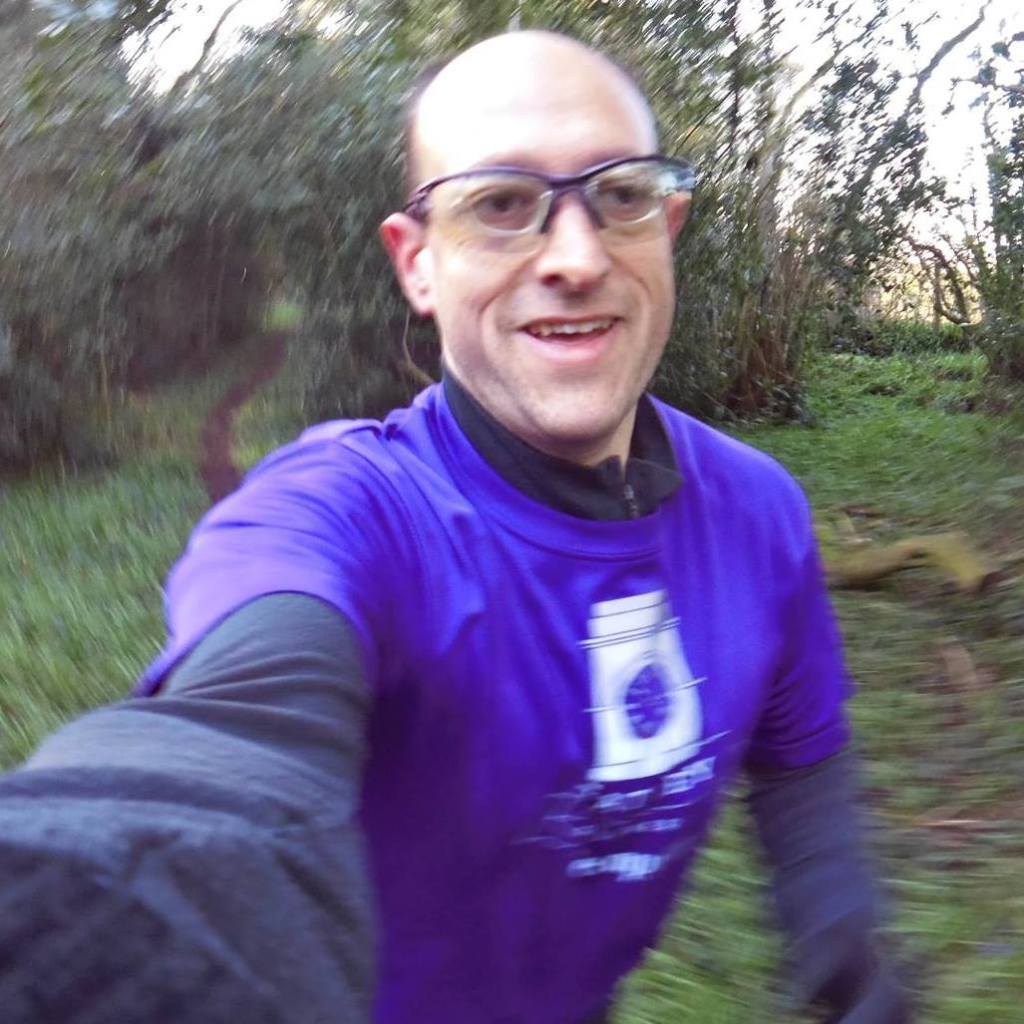
I’m pretty much over it now and ready for a light run tomorrow on the treadmill – I know a lot of ‘real’ runners avoid the treadmill like the plague, but for me, when I need to come back from an injury, having somewhere to run that is a soft surface and I can ‘give up’ while still close to home however far through the run I am. A running track works equally well, but those aren’t always as easy to find…
For me the hardest thing I’ve found when training isn’t the exertion in the hard work outs, it isn’t the cold, it isn’t carting around masses of kit all the time, its the ‘easy’ bits that are really hard. The zone 1 runs where you feel like you’re barely moving, the rest periods where you’re not ‘allowed’ to run, those are the hard bits. And so, at the moment, my training, despite having to be ‘easy’ is actually very hard.
10th December 2013
This morning did not start quite as planned; my cough and cold had receded, and I was expecting my calf ’tweak’ to still be around but continuing to ease off. However, I’d noticed the previous day that my calf tweak had been morphing downwards towards my heel and was feeling a bit more tendon like. Well this morning, my Achilles tendon was properly sore – I don’t quite know how a week of not running has achieved that, but it has; sad, sad panda.
Still, I’ve had it come and go even before I started running, usually appearing for no reason and disappearing fairly quickly and inexplicably, so I was not totally disheartened, but 5 mins on the treadmill at lunch time and it was clear that I wasn’t going to be running far today. I broke out on to the elliptical trainer, which is not my favourite thing in the world, but makes a change from a stationary bike. Then I thought I’d see whether it might have stretched out a bit, nope another 5 minutes on the treadmill and I looked like I was attempting some kind of hunchback of Notre Dame style running.
The despair; it hits pretty quick after trying to come back after an injury and finding its still there, particularly after reading some of the prognoses for achilles tendonitis. I’m taking some comfort from the fact I’ve had this before and it went quickly enough last time.
On the bright side, I’m pretty convinced my cough and cold are far gone enough to get some intensity back; having now had almost a week’s break from the pool, I’m really missing it and will be glad to get back to it tomorrow, throw in a bit of a strength set and I should at least feel like I’m doing something.
And then it looks like I’ll be doing a lot of cross-training for the next few weeks. To be fair I’ve done this before to prepare for Deva Tri and did pretty much no run training up to the event and still made a 41 minute 10k at the end of the tri – I’m not quite convinced that I can run a marathon off no run training though!
3rd of March 2015
Well, it is now just over a year later; and it turns out I was right about not being able to run a marathon off no run training. To cut a long story short by the time it got to mid-January I could still run no more than a handful of minutes without my calf becoming very painful, with the deadline for deferring my 2014 Marathon entry fast approaching I decided to defer to 2015. By happy coincidence a group of locals (Gatley Runners) decided to start a running group to do couch to 5k together; so with a slightly sinking feeling that I was back where I started 2 years earlier I joined them and finally, by the beginning of March 2014 I was back up and running 5-6k several times a week without issue.
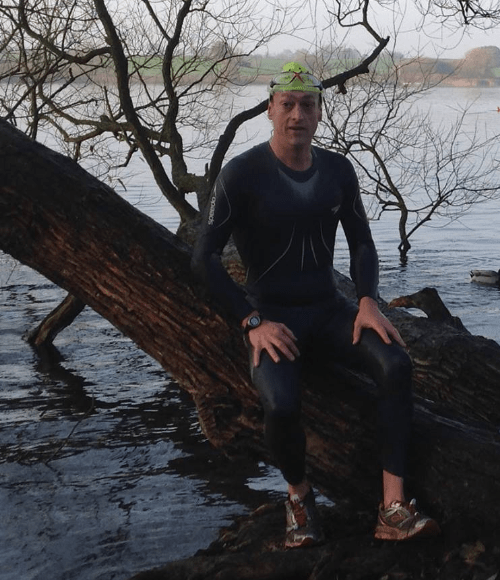
At this point I started to put events in my calendar and have goals again primarily a 10k in early September, but basically I just signed up to events that looked fun; albeit not fun to a normal person, after all swimming 6k in a lake overnight isn’t everyone’s idea of fun, but I loved it. I did off road triathlons, swimming races, a couple of 10ks and even a combined river swim and fell run where I came second overall (!!!) I demolished my 10k PB and brought it down to just over 38 minutes…
And so after the Salford 10k in September it was time to come back to my nemesis the Manchester marathon; if there was one thing I knew it was that I couldn’t rely on writing a training plan and expecting to be able to follow it without illness or injury. So a very long base training period followed by the standard build and peak cycle was in order – 6 months of training plan for one race; plenty of time to re-work things around illness or injury but at the same time a huge period to commit to one race with plenty of pressure and stress.
So far, things have gone pretty much as expected illness, niggles and injury have cost me the odd workout, day even a whole week. But, largely, the key workouts have been done, a 22 mile long run has happened and, as of last weekend, I’ve raced a half marathon, in a decent time for a hilly, windy day in Anglesey, 1:28:35.
However, one of those niggles has kept coming back since the beginning of January, an IT Band issue in my right leg, not bad enough to stop me, but enough to slow me down and to make me wonder if at some point its going to bring me to a stop on a long run, maybe even marathon day… So I’m taking 6 days off running to see if I can clear it completely or at least get a significant improvement.
The question then is whether I’ll come back to this blog as a sub-3 marathoner, on another break from running or for another reason completely…
20th March 2015
Not with a bang but with a whimper… In fact, I didn’t go sub-3 and I didn’t end up with an enforced running break due to injury. Just after the half marathon point in the Manchester Marathon my legs started to get sore and stiffen then gradually over the following 6 or 7k my quads and hamstrings stiffened and my run became a shuffle. Shortly after mile 20 I walked, by that point it was clear that sub 3 was long gone (as was the sub-3 pacer) so it was now about finishing in the shortest time my legs would let me, and I was reasonably confident that run/walk would end better than a shuffling run as far as I could go. And so, with amazing support from the crowds lining the last 5 miles, I did it, it took 90 minutes or so but 3:35 is a perfectly decent marathon time (its a pretty amazing marathon time for someone who finished by doing run/walk)!
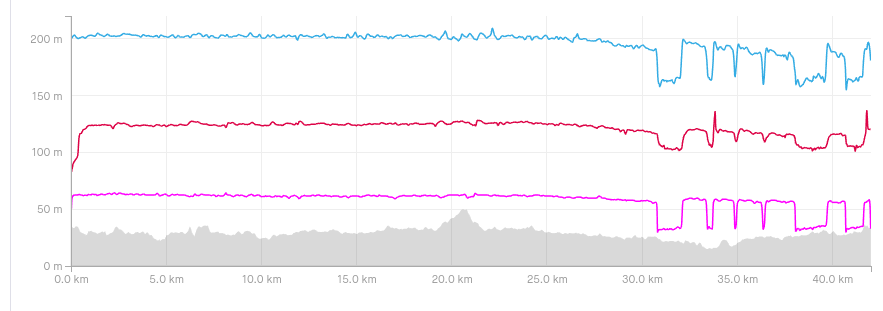
So what did I learn? Well, Thursday of the previous week I had been at the physio with, a left knee issue that had started a week after the return from my 6 day run break, but also I had a psychological problem of being paranoid that an injury would appear half way through the marathon and I would have to make the choice between continuing and doing permanent damage and dropping out. Interestingly despite most of my problems having been with injuries on long runs, there had been a couple of runs that had been very similar to the marathon, great energy levels, then soreness and stiffness in the legs which killed my pace; and that’s where I need to start looking next.
3rd May 2017
So another two years have passed; the remainder of the 2015 season was unremarkable, I did Salford Tri and took 10 minutes off my previous best, an open water swim race (placed ok but in a pretty unremarkable time) and then did Solent half marathon – just maintaining my sub 1:30 half marathon streak by 1 second!
At the end of that season I spent many hours poring over the data from the training – sadly the conclusions I did come to weren’t terribly helpful; there was nothing that I could see that would have allowed me to predict that my legs would fall apart on the day. Additionally the runs that were too long and likely contributed to the injuries were either by accident or difficult to have dropped and still reached a 20 mile run in the correct timescale.
So I think the only ‘learning outcomes’ I can take away from 2014 and 2015 are: 1) I need to increase running volume very conservatively. 2) I need to be routinely running very close (if not further) than my race distances to be sure of finishing comfortably.
Back in 2013 when I was training and racing Deva Tri, I did a lot of masters swim session with a guy called Dan who was hopeful of qualifying for the GB Age Group team – it was clear he was a league above me but we chatted a lot and it was interesting to watch his journey (sadly unsuccessful thanks to illness). However, it did leave me with a seed planted in my mind as to whether I could ever get that fast.
At the end of summer 2015 it was clear I’d been getting faster, but I still needed to get a good 20% faster to be in the ballpark of GB AG qualification, however, while browsing for events to do in 2016 I spotted the Chatsworth triathlon and that it was going to be a qualifier – I knew hilly events were my strong point, but I also knew that I would still be a good few minutes away from the pace. Weighing things up I thought it was worth a shot if only to enjoy the process and see how close I could get.
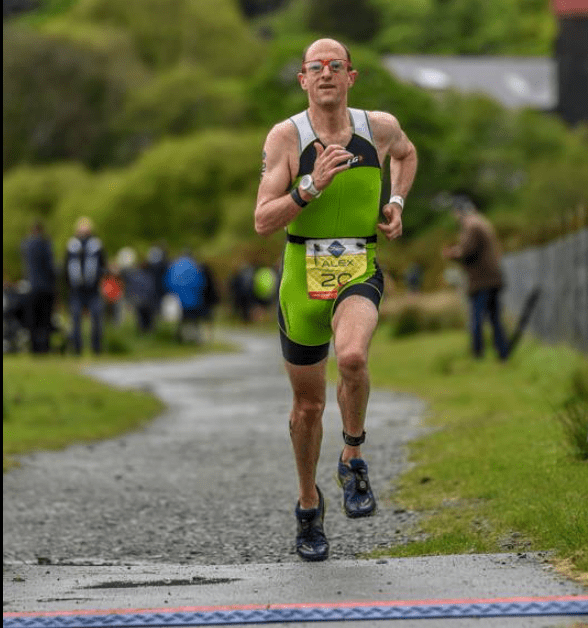
The long and short of it was that I was still around 10% away from the qualifying places, but I was hooked on open water swimming and runs and bike rides in hilly scenery.
The rest of the season was taken up with picking random events including some fell runs and going to have some fun; which led to picking up a 4th place on Decathlon’s running series 5K and a (very lucky) second in age group at South Manchester Triathlon.
A free place at Wilmslow thanks to the high placing at South Manchester gave me an early season race to aim at and some savings and stabilisation of the power meter market meant it was time to start training with power. Some pretty solid time gains were apparent, although on the day a couple of hold ups on the bike course and leisurely transitions meant they didn’t actually give me a PB on the course.
A decent finish at the first MTC aquathlon of the season came a week later – 8th place in a field with a number of guys where GB AG kit isn’t to be sniffed at.
Plus a few fell runs over the winter.
And now, I’m not sure – I’ve been doing a bit of coaching for other runners in Gatley Runners and I think if I want to get in to coaching then I should probably have been coached myself, so I’ve arranged a meeting with a coach and come back to this blog to remind myself of the journey so far.
18th May 2019
I spent 2018 having fun with running; passed the UKA LiRF course, did lots of fell running, ran a winter of Cross Country races with Manchester Harriers & Athletics Club.
And then, for reasons that now escape me, I decided to stop having fun and train for a marathon. My strategy was much the same as before; slowly build volume and put in some hard and long workouts. But try and get to 50-60 mile weeks in the lead up to the marathon rather than the 40 somethings that I made for Manchester.
The marathon of choice was White Peak Marathon…
The first 10-11 miles were incredibly comfortable and I was holding back as much as I could but found a group to run with that was going approx. 2 seconds per km faster than my plan. By mile 15 hamstrings and glutes were feeling sore and I was getting concerned that if they carried on getting sore at the same rate it would be very bad…
I was holding approx 4:10 (plan 4:09) from mile 7 through to about mile 17 – matching the ‘group’ (now just two of us). At mile 17 and beyond it was taking a lot of effort to hold 4:15 and my avg. pace for the section started to creep up.
I then jogged the field sections on the closed bridge diversion and at about mile 18 my glutes, hamstrings and calves were very sore by that point and I was struggling to hold 4:30 from 18-20. The descents from mile 20 – 25 allowed my hamstrings and glutes to recover a bit (and gave me some free pace).
I checked my ETA at the bottom of the last descent with just over a mile to go and it was showing 3:01:30 – at this point my legs were not even close to being able to hold 3:30 min/km (which would have been needed to go sub-3).
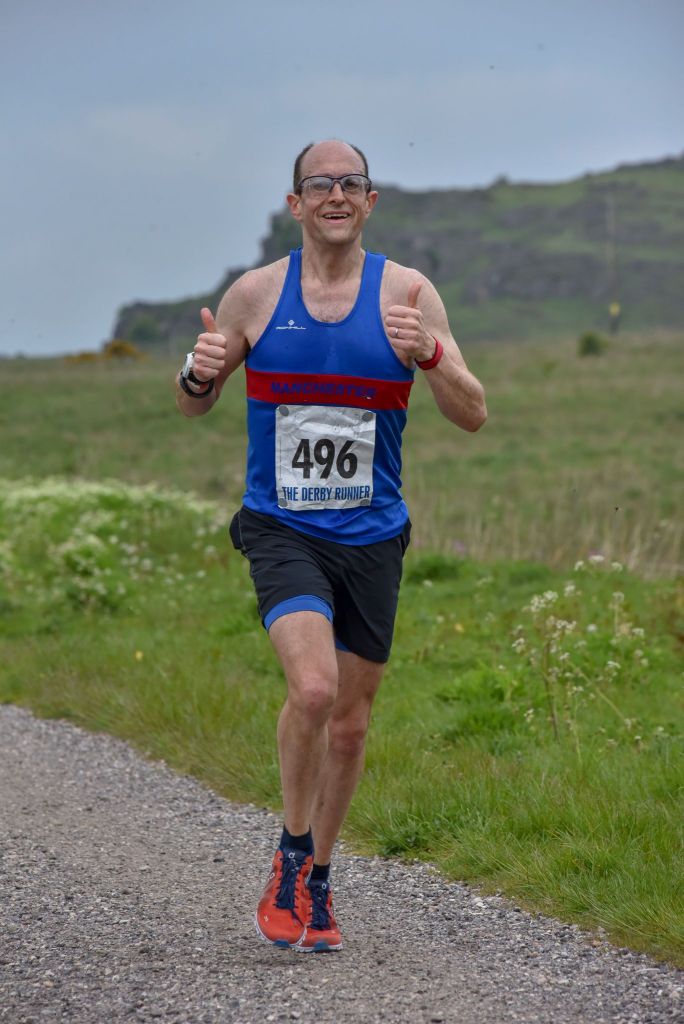
I tried to lose as few places as possible on the last section and remarkably came second in my age group with a 3:04 – however, not the sub 3 I’d been hoping for…
And Then a Pandemic…
The pandemic was kind to me; I no longer had school runs to manage or a commute to work and so some of the extra time was dedicated to running – which meant my 5km time dropped under 18 minutes, my 10km time dropped under 37 minutes and overall I felt in great shape.
However, there were very few organised events which meant I did very little racing; but by the end of 2020 organisers were starting to schedule events and as such I decided to have another crack at a sub-3 marathon.
The obvious choice was White Peak again; I knew the course and was comfortable that with a few more miles on the legs, a kilo or so of weight loss and a better pacing strategy that sub-3 should be very much possible (nothing with marathon running is ‘probable’ until the last mile, possible is the most I will ever say about a marathon goal until that point!)
20th June 2021
Training had been going really well for White Peak Marathon and Aintree Half Marathon had shown it was paying off (with a massive PB of 1:18). I had planned my taper to be 80% of maximum volume 3 weeks before the race, 60% 2 weeks before and then 50% the week of the race – however, half term and travelling coincided with the first of those taper weeks and indulging in excessive amounts of food and alcohol and hanging out with family don’t generally lead to the best discipline when following a training plan. That being said I reached the end of that week more or less on track…
Then I got an email Friday morning saying that my race had been cancelled… I went out for that day’s planned run anyway, but struggled to find the motivation for the intended fast finish and it became a bit of a damp squib. That afternoon I did some searching and managed to find an alternate race; Cholmondeley Castle Marathon, but only a week away…
Unfortunately I awoke Saturday morning in a strange bed (planned and with my wife, not just a random strange bed) and with a nasty backache (having been fine the previous day), I wasn’t too worried initially as it has happened occasionally when sleeping in strange beds and normally sorts itself out in 24 hours…
24 hours later my back was no better, which was slightly concerning, I wound back the workouts as best I could while still getting some runs at their intended pace. Friday arrived and I was distinctly dubious as to whether I could manage a 10k let alone a marathon, but I diligently checked the race pack anyway ready for the weekend’s race… At which point I found that I was a week early and I had another week of training to do… Yay, sort of…
The next week was distinctly mixed, Sunday felt great when I started but I ended up getting a taxi home when I came to the conclusion half way through the run that I was doing more damage than good. Monday was a total disaster when I spent 3 hours on the bike on various school and swimming runs and ended the day by leaning down to lock my bike and feeling something in my back go ‘TWEAK!’ Tuesday I abandoned the marathon pace section of my workout as my back tensed up to the point I couldn’t rotate my hips…
Things got better the rest of this week and Friday’s run felt almost normal, Saturday I did just a little leg stretch and it was with a great deal of trepidation that I went to bed on Saturday night.
And so to the race… as very often happens on race day, I felt epic when the gun went and shot off at 3:40 min/km, thankfully I’m not a (total) idiot, so I backed it back down to my intended race pace within a few hundred meters of the start and found myself in a very comfortable 1st place. Laps 1 to 3 of 6 went exactly to plan, spot on my intended times albeit with rather more rough ground, hills and trail sections than I had planned when I came up with my target pace, however I knew I had a solid lead of several minutes over 2nd place… Lap 4 was where things started to go a little awry, my legs began to point out that doing flat marathon pace on a hilly twisty course was not the cleverest idea and my pace started to drop a little, I pointed out to my legs that they had had plenty of training, plenty of rest and they should Harden The Flip Up. On lap 5 my legs pointed out that if I was going to finish then I was pretty unlikely to do it without them and that I should be being a lot nicer to them and by that point I had to concur.
So by the beginning of Lap 6 the wheels had properly come off; my legs were shot, I was feeling a bit light headed and the gels weren’t sitting well on my stomach, so I slowed to a walk and debated whether to walk the remaining 7km or whether to just pull out at that point.
They say that the marathon really starts to be a race at 20 miles and that you never really know how a marathon’s going to go until the finish. At 22 miles I was still in first place but barely managing a walk. Coincidentally, the half marathon had started just as I came through for my last lap and I was being overtaken by the back markers of the half marathon, which you would think might have been disheartening, but actually seeing all sorts of people out doing a half marathon and determined to enjoy it started to buoy my spirits. Suddenly a young woman passing me shouted to me; “Come on, you can do it!”, and I realised that with only 6 km to go, she was right – I’ll never find out who she was, but she saved my race.
Having played with ‘The Galloway Method’ (J*ffing); I knew exactly what I needed to do – 900m run, 100m walk and repeat… I kept checking over my shoulder as the last few km ticked by, but unbelievably I began to realise that I hadn’t see any of my close competitors on any of the switchbacks in the last couple of km; I might still be going to win.
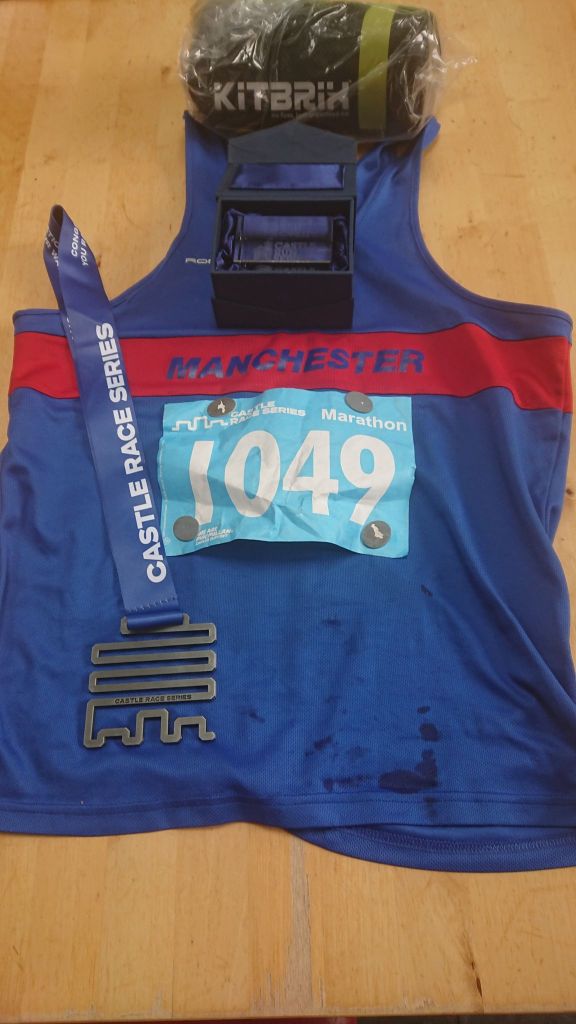
I crossed the line in 3 hours 15 minutes and change according to my watch accompanied by “and here we have the first marathon finisher, Alex Masidlover!”
So still no sub-3 marathon, but a marathon win, how odd…
December 2021
One thing I hadn’t mentioned up to this point was that in April 2020 I noticed a soft lump at the top of my groin that looked exactly like a hernia; I got a doctor’s appointment and confirmed it was a hernia however, with no discomfort and no other issues with it I was not going to be getting it fixed mid-pandemic or any time soon…
It turns out that this was less than ideal; in December 2021, I woke up early one morning completely unable to move my legs without intense pain in my adductors and ended up crawling to the bathroom. After 2 days I was able to walk the 400m to the physiotherapist who advised it was probably some kind of protective mechanism related to the hernia and to see how it went but to push for the surgery to be brought forward.
Well, there wasn’t much running for 3 weeks, but the recovery did happen in strange fits and starts (including jogging around a cross-country race on my birthday and finishing a good 10 minutes slower than normal).
One thing I hadn’t put in this diary was that in September I agreed to coach a group of novice marathoners; luckily they were aware of my spectular inability to pace a marathon and were using me as a cautionary tale as much as a coach. At some point in the process I agreed that I would start the marathon with the group and stay with the last person in the group through to the finish and try and get them across the line.
So having barely run for 3 weeks and with only 3 months until the marathon I started to wonder whether I’d be the one who needed supporting across the line!
Well, my other posts in case studies show how that went (well!) albeit my own training consisted of a handful of easy runs each week with a long run at the weekend, not awful but certainly not even close to what is needed for a fast marathon. However, I figured that I’d done a fair few long runs and was starting to feel ‘normal’ again, maybe with some speedwork I could do something interesting…
21st May 2022
So with a Chronic Training Load of two thirds of what it should have been for a half decent attempt on a 3 hour marathon I decided I would set out on 3 hour pace and see whether there was a solid link between Chronic Training Load and how far through White Peak Marathon I could get at 3 hour pace.
I remember the first few km feeling harder than they should have been – I think there was a degree of false perception from the incorrect instant pace on the Fenix 6. The first 45 minutes was at 4:21 avg pace (4:08 adjusted for the hill) and 152 average HR – HR definitely higher than expected. I held on for the first hour – at that point there was another rise which dealt a big mental blow (14km-16km) this was just before the Parsley Hay turn around. After the turn around things picked up both mentally and in pace and I hit the half way point on track for sub-3 (1:31 with the remainder all downhill) Things then start slipping at 22km – I don’t clearly recall what happened, but I do remember a combination of minor GI irritation and some tightness/cramping in legs causing me to realise that I was not going to hold the pace – I then switched to a run/walk strategy. But each mile was at a lower HR. The first descent helped a little, then I really went for it on the second descent, but that then battered my quads to the point I had to walk two miles until I was back on the final level section of canal. I was eventually able to get back up to 4:20 – 4:10 paces by the end of the canal section.
Overall a 3:54 – a very respectable marathon time – but not sub-3 by any means, however, it had given me an awful lot of confidence; my prediction of how far I would get at my target pace was almost spot on, but more than that I discovered a mindset. The first couple, ok three, times the wheels came off in the last half of a marathon, my mind had ‘gone’ as much as my legs had. But this time, although my legs went, I had been expecting it; I was more than comfortable with a walk-run to the finish and had absolutely no doubts that I could do it.
Its strange to say, but I think that section of walking, looking down on the beautiful Derwent Valley, quite content that I could walk and jog to the end, was the point I realised that I could ‘do’ marathons.
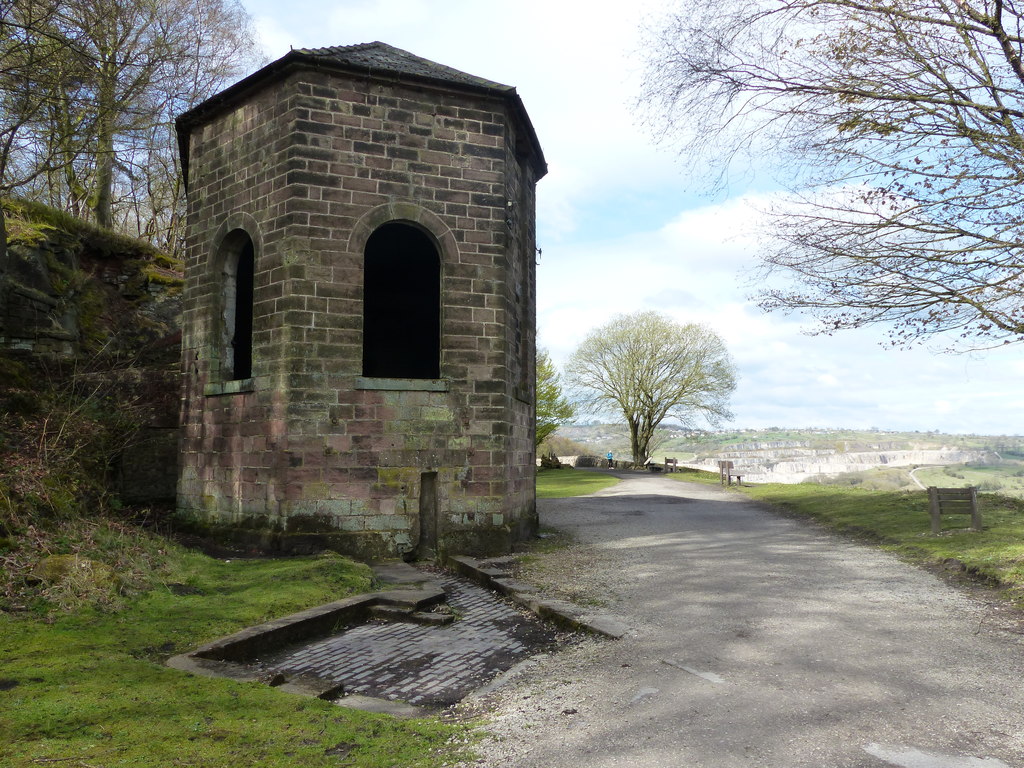
cc-by-sa/2.0 – © Chris Gunns – geograph.org.uk/p/5897686
Summer 2022
Summer 2022 is a long and tedious story involving a pandemic that resulted in my training plan for the summer being focused on a race in October that involved a 1.5km loch swim, a 40km gravel ride, a trot up and down Ben Nevis, another 40km gravel ride and a 1km finishing sprint.
So plenty of swimming, cycling and a fair bit of hill work filled my time between White Peak Marathon and early August when I received an email telling me that my Nevis race had been postponed until 2023…
So with a good few months of training, albeit not exactly road-running specific, behind me I did the obvious thing and entered Chester Marathon with 7 weeks to go…
By happy (I think) co-incidence a good friend and regular training partner of mine was training for London Marathon which was on the same day as Chester. However, with his marathon PB being almost 25 minutes faster than mine our training paces were only just about compatible.
My scheduled Mile Reps at marathon pace suddenly turned into Mile Reps at 3km pace and when we went for a long run and he suggested aiming for sub 5 minute kms – I took this very literally and made sure we stayed under 5:00 min/km for the whole thing gradually drifting down to 4:20 min/km. It was only at the end when we stopped that he revealed that sub 5:00 min/km had been more of an aspiration than an actual plan…
And so I scheduled workouts for the remaining few weeks with a target of staying just the correct side of broken and a nice taper and then compared the resulting numbers with my previous PB and found that it was going to be very close!
In the end I made it to the start line uneventfully with 7 weeks of training that had gone pretty much perfectly to plan and with some unusually fast long runs that felt surprisingly unchallenging.
I set Pace Pro up on my watch with a target of 2:57:00 and arrived at the start line of Chester Marathon feeling cautiously optimistic and unusually relaxed for a marathon. I set off and held my pace within a couple of seconds of the target paces that my watch told me to.
Slightly oddly I managed to start behind the 3 hour pacer and it took several miles before I overtook him; I did ask him what pacing strategy he was following as he seemed to be several minutes ahead of 3 hour pace – apparently they usually measure the course half a mile too long so he was taking that into account; just what you want to hear!
My quads started to get tender around 15 miles but I found that shortening my stride and upping cadence and focusing on form made them more comfortable. I then felt solid all the way through to past 21 miles and able to hold the pace pro times.
However, after that I started yo-yoing a bit. The inclines slowed me more than pace pro recommended and I then compensated for that on the flats and downhills. What I didn’t realise at the time was that my HR was going over 160 bpm each time I pushed on a bit (my lactate threshold HR is 156 bpm) – by 23 miles I was feeling queasy and light headed and decided to slow up slightly to try and avoid throwing up or passing out further down the road; neither of which generally help your progress towards the line – passing out particularly.
Once I was comfortable again I sped up – and the cycle continued… In fact I must have completely zoned out at some point in mile 23 since mile 24 came up so quick I thought it had been put in the wrong place. Mile 25 hit a bit of a drag uphill into the city center and my pace dropped briefly back to 6 min/km, however, I felt I had enough time in hand not to worry too much and then in the last 800m the course dropped back down to the river side which allowed me to pick the pace back up and get to about 30s behind the pace pro target.
At this point, baring a major course measuring error, I knew I could pretty much walk the last couple of hundred meters and still stay under 3 hours – but didn’t because obviously you still want to look good crossing the line!
So, two weeks shy of nine years after I set myself the goal I had done it; in the end I was just glad to have finished more or less in one piece – in the end it seemed a little underwhelming, my results in other distances in the last few years had been far more impressive and so I’d been confident for some time that I could do it, I just hadn’t.
After all this, what have I learnt? Arguably I’ve accumulated a huge amount of experience and knowledge in that 9 years, but have I realised anything profound? No, not really…
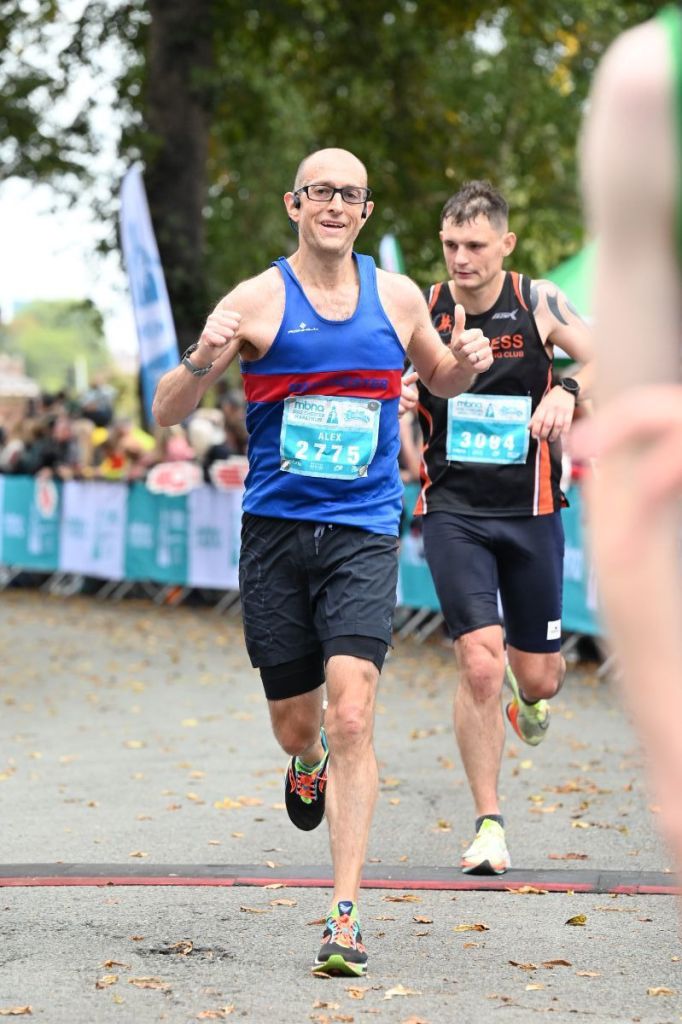
Addendum
Shortly after Chester a friend pointed out that my time was fast enough for a London Marathon Good for Age Application. London has never really been one of my bucket list events – for various reasons I’ve spent some time in London but it just isn’t my sort of place – nonetheless it is one of ‘those’ events and it seemed silly not to at least put in the application.
Unfortunately I finally got a date for my hernia repair two weeks before London Marathon – and even my most enthusiastic of friends told me it would be an exceptionally silly idea to try and run (or run/walk it) two weeks after surgery…
Watching it on IPlayer got me thinking that it did look quite fun; and this sent me down the rabbit hole of sub-3 training again.
Manchester 2024 became the target race and I decided to use my training ‘strategy’ from Chester, i.e., run lots of easy mileage until about 10 weeks before the race and then stick in a handful of mile reps and the odd fast finish long run.
I lined up feeling pretty good and in, what I thought was, the 2:50 – 3:00 pen. About 3 minutes before the start 3 pacers with 3:00 flags marched to the front of the pen surrounded by scores of runners. In hindsight I should have pushed past and got in front of them before the gun went – sadly I thought that I would do what I often do in races and pick people off while negative splitting the race.
This time though I hadn’t quite bargained on just how overcrowded the Manchester Marathon course would be; it took 14 miles of weaving to get ahead of all the 3 hour pacers – including sections of leaping on to the pavement, dodging street furniture and spectators and the odd 3:30 min/km sprint to get past a bunch of them.
By the time I had clear space in front of me my legs were starting to suffer but my gradual negative split strategy was still going ok. By mile 20 I could go no faster and any little slopes were dragging my pace back quite noticeably. With about 2 miles to go I caught up with one of the athletes I had been coaching and being able to focus on pushing someone else to the finish really helped take my mind off the state my legs were in.
I crossed the line with a chip time of 2:58 and a watch time of 2:56 for 42.2km (which tells you something about how much weaving I had to do!)
Sadly the London Marathon 2025 Good For Age application times are 7 minutes faster than they were for 2024 – so I don’t have quite as much safety margin; so we will see whether I will be running yet another road marathon in 2025.
 Coach Alex Masidlover